Barcode Inventory Software: The Complete Guide to Modern Inventory Management
In today’s fast-moving business environment, companies can no longer rely on spreadsheets and manual tracking methods to manage inventory. Whether you operate a warehouse, retail store, manufacturing unit, or distribution center, having complete visibility into stock movement is essential for operational efficiency and profitability.
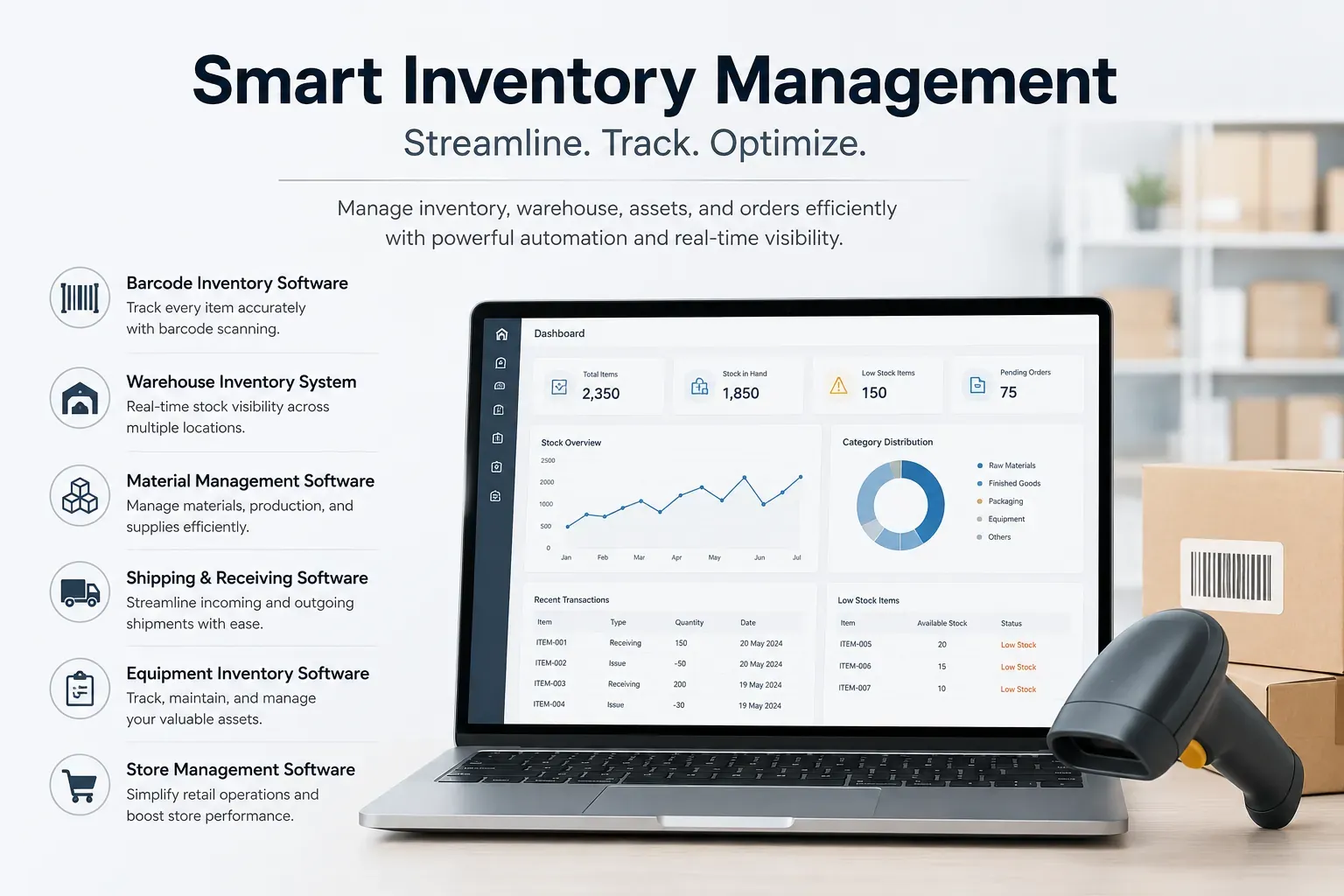
Modern businesses are increasingly adopting barcode inventory software to automate inventory tracking, reduce human errors, and improve stock accuracy. Combined with a powerful warehouse inventory system, organizations can streamline operations from procurement and storage to shipping and customer delivery.
This comprehensive guide explains how inventory management technology is transforming businesses and why investing in the right solution can significantly improve productivity, inventory accuracy, and customer satisfaction.
What Is Barcode Inventory Software?
Barcode inventory software is a digital solution that uses barcode technology to track products, materials, assets, and inventory throughout their lifecycle.
Each item receives a unique barcode that can be scanned using handheld scanners, mobile devices, or integrated scanning systems. The software automatically records inventory transactions, reducing manual data entry and minimizing costly errors.
Key Benefits of Barcode Inventory Software
- Real-time inventory tracking
- Reduced human errors
- Faster stock audits
- Improved inventory accuracy
- Enhanced warehouse productivity
- Better reporting and analytics
- Lower operational costs
- Increased customer satisfaction
Businesses using barcode technology often experience inventory accuracy rates above 99%, helping eliminate stock discrepancies and inventory shrinkage.
Why Businesses Need a Warehouse Inventory System
A robust warehouse inventory system helps organizations manage inventory across multiple warehouse locations while maintaining complete visibility over stock levels.
Without an effective warehouse management process, businesses may encounter:
- Overstocking
- Stockouts
- Delayed shipments
- Inventory inaccuracies
- Increased labor costs
- Reduced customer satisfaction
A modern warehouse inventory system centralizes inventory data and provides real-time updates across the entire supply chain.
Features of an Advanced Warehouse Inventory System
Real-Time Inventory Visibility: Monitor stock quantities instantly across multiple locations.
Multi-Warehouse Management: Manage inventory across regional warehouses, distribution centers, and fulfillment facilities.
Automated Reordering: Prevent stock shortages through intelligent reorder points and automated purchasing workflows.
Inventory Forecasting: Use historical sales data to predict future demand and optimize stock levels.
Reporting and Analytics: Generate actionable insights for inventory performance, turnover rates, and stock valuation.
How Material Management Software Improves Operational Efficiency
For manufacturers, distributors, and industrial businesses, effective material tracking is critical.
Material management software helps organizations plan, track, and control raw materials, components, and supplies throughout production processes.
Benefits of Material Management Software
- Better procurement planning
- Reduced material wastage
- Improved production scheduling
- Enhanced supplier management
- Increased inventory visibility
- Lower carrying costs
By implementing material management software, companies can ensure that the right materials are available at the right time while minimizing excess inventory.
Common Industries Using Material Management Software
- Manufacturing
- Construction
- Engineering
- Automotive
- Aerospace
- Pharmaceuticals
- Food Processing
The Importance of Shipping and Receiving Software
Inventory management doesn’t end when products enter the warehouse.
Efficient inbound and outbound logistics require dedicated shipping and receiving software that accurately tracks goods throughout the fulfillment process.
What Does Shipping and Receiving Software Do?
Shipping and receiving software automates the movement of products from suppliers to warehouses and from warehouses to customers.
Key functions include:
- Receiving inventory
- Purchase order verification
- Shipment tracking
- Label generation
- Carrier integration
- Delivery confirmation
- Return processing
Advantages of Shipping and Receiving Software
Faster Receiving Processes: Employees can scan incoming inventory and instantly update stock records.
Improved Order Accuracy: Automated verification reduces shipping mistakes and fulfillment errors.
Better Customer Experience: Accurate deliveries lead to higher customer satisfaction and retention.
Real-Time Tracking: Monitor shipments throughout the entire supply chain.
Equipment Inventory Software for Asset Tracking
Many businesses need to track more than inventory. They must also monitor valuable equipment, tools, machinery, and fixed assets.
Equipment inventory software provides a centralized platform for managing business assets throughout their lifecycle.
What Can Equipment Inventory Software Track?
- Tools
- Machinery
- Vehicles
- IT equipment
- Medical devices
- Manufacturing equipment
- Rental assets
Benefits of Equipment Inventory Software
Asset Visibility: Know exactly where every asset is located.
Maintenance Scheduling: Automate preventive maintenance to reduce downtime.
Asset Utilization Tracking: Monitor equipment performance and usage patterns.
Regulatory Compliance
Maintain accurate records for audits and compliance requirements.Businesses using equipment inventory software often experience reduced asset loss and improved operational efficiency.
Why Retailers Need Store Management Software: retail businesses face unique inventory challenges due to changing customer demand and multiple sales channels.
Store management software integrates inventory management with retail operations to create a seamless shopping experience.
Features of Store Management Software
- Point-of-sale integration
- Inventory tracking
- Customer management
- Employee management
- Purchase management
- Sales reporting
- Multi-location support
Benefits of Store Management Software
Improved Inventory Accuracy: Track inventory across physical and online stores in real time.
Better Customer Service: Ensure products are available when customers need them.
Increased Profitability: Optimize inventory levels and reduce carrying costs.
Streamlined Operations: Manage sales, stock, purchasing, and reporting from a single platform.
Essential Features to Look for in Inventory Management Software
When selecting a business inventory solution, look for these critical features:
Barcode Scanning: A reliable barcode inventory software platform should support rapid and accurate scanning.
Cloud-Based Access: Cloud technology enables remote inventory management from any location.
Mobile Compatibility: Access inventory information using smartphones and tablets.
Automated Alerts: Receive notifications for low stock, reorder points, and shipment delays.
Integration Capabilities: Connect with ERP, accounting, eCommerce, and CRM systems.
Advanced Reporting
Generate detailed insights into inventory performance and operational efficiency.
How Inventory Automation Reduces Business Costs
Inventory automation eliminates manual tasks that consume time and resources.
Businesses implementing modern inventory management systems often achieve:
- Reduced labor costs
- Lower inventory carrying costs
- Fewer stockouts
- Increased order accuracy
- Faster fulfillment
- Improved cash flow
The combination of barcode inventory software, warehouse inventory systems, and shipping automation creates a highly efficient operational ecosystem.
Future Trends in Inventory Management
The future of inventory management includes advanced technologies such as:
Artificial Intelligence: AI-driven forecasting improves demand planning accuracy.
Internet of Things (IoT): Connected devices provide real-time inventory monitoring.
RFID Technology: RFID enables faster tracking without direct scanning.
Predictive Analytics: Businesses can anticipate inventory needs before shortages occur.
Cloud-Based Inventory Platforms: Cloud solutions continue to improve scalability and accessibility.
Modern inventory management requires more than spreadsheets and manual processes. Businesses seeking growth, efficiency, and profitability should invest in integrated solutions such as barcode inventory software, warehouse inventory systems, material management software, shipping and receiving software, equipment inventory software, and store management software.
By automating inventory tracking, optimizing warehouse operations, managing materials efficiently, streamlining shipping workflows, tracking valuable assets, and improving retail operations, organizations can reduce costs, increase accuracy, and deliver superior customer experiences.
As competition continues to increase across industries, adopting advanced inventory management technology is no longer optional—it is a strategic necessity for long-term success.
FAQs Barcode Inventory Software
Q: What is barcode inventory software used for?
Ans:Barcode inventory software helps businesses track inventory accurately using barcode scanning technology, reducing manual errors and improving operational efficiency.
Q: How does a warehouse inventory system work?
Ans:A warehouse inventory system tracks stock levels, inventory movement, storage locations, and order fulfillment activities in real time.
Q: Who needs material management software?
Ans:Manufacturers, construction companies, engineering firms, and industrial organizations benefit significantly from material management software.
Q: Why is shipping and receiving software important?
Ans:Shipping and receiving software improves inventory accuracy, speeds up fulfillment processes, and enhances customer satisfaction.
Q: What are the benefits of equipment inventory software?
Ans:Equipment inventory software helps organizations track assets, schedule maintenance, reduce losses, and improve equipment utilization.
Q: How does store management software help retailers?
Ans:Store management software integrates inventory tracking, sales management, purchasing, reporting, and customer management into one platform.